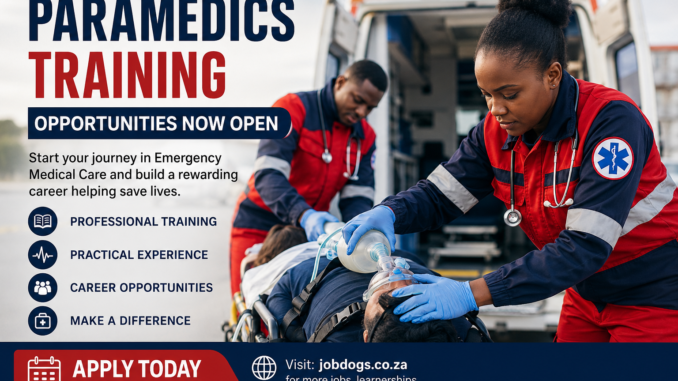
South Africa continues to experience a growing demand for qualified healthcare professionals, especially in emergency medical services. Paramedics and emergency care workers play a critical role in saving lives, assisting injured patients, responding to emergencies, and supporting hospitals and healthcare facilities during medical crises. For individuals who are passionate about helping people, working in healthcare, and building a respected career, paramedic training can provide an excellent opportunity to enter the medical field.
Emergency Services
Applications for paramedic training programs are now open at several accredited institutions across South Africa. These programs are designed to equip students with the practical knowledge, emergency response skills, and medical training needed to work in ambulances, emergency response teams, clinics, and healthcare environments.
Paramedics are often the first professionals to arrive during emergencies such as vehicle accidents, medical emergencies, fires, injuries, or disasters. Their role includes stabilizing patients, performing emergency procedures, and transporting individuals safely to medical facilities. Because of the importance of this work, paramedic training combines both classroom learning and practical field experience to prepare students for real-life emergency situations.
Why Choose a Career in Emergency Medical Services?
A career in emergency medical services offers many benefits for people who want meaningful and stable employment. Unlike many careers that focus only on office work, emergency medical services provide a dynamic and rewarding environment where workers make a real difference in people’s lives every day.
Many young people across South Africa are turning to healthcare careers because the medical sector continues to offer growth opportunities and long-term career stability. Emergency medical services are essential in both public and private healthcare systems, meaning trained individuals may find opportunities in ambulances, hospitals, rescue services, clinics, private emergency companies, and community healthcare programs.
Working in emergency medical care also provides opportunities for career growth. Individuals can begin with entry-level training and continue advancing their qualifications over time through additional studies and professional development.
Training & Certification
Minimum Requirements for Applications
Most paramedics and emergency medical care training programs require applicants to meet certain minimum requirements before they can be accepted into training. While requirements may differ between institutions, the following are commonly required:
- Grade 12 / Matric certificate
- Ability to communicate effectively in English
- Basic understanding of science or life sciences
- Physically fit and medically healthy
- Ability to work under pressure
- Good interpersonal skills
- Willingness to assist people in emergencies
- No criminal record
Some institutions may also consider applicants with grade 11 depending on the training program being offered. Certain advanced programs may require mathematics, physical sciences, or life sciences as school subjects.
Applicants should always read the requirements carefully before submitting their applications.
What Students Learn During Training
Paramedics’ training programs are designed to prepare students for emergency healthcare environments. Training usually combines theoretical learning, practical simulations, and real-world field experience.
Geographic Reference
Students may receive training in the following areas:
Emergency Medical Care
Students learn how to respond to emergency situations involving injuries, illness, trauma, or accidents.
Patient Assessment
Training includes identifying medical conditions, checking vital signs, and assessing patient injuries.
CPR and First Aid
Cardiopulmonary resuscitation (CPR) and first aid training form an important part of emergency medical education.
Ambulance Assistance
Students learn how ambulance operations work and how to safely transport patients.
Trauma Response
Training covers emergency treatment for burns, fractures, bleeding, shock, and other traumatic injuries.
Communication Skills
Emergency medical workers must communicate effectively with patients, families, hospitals, and emergency teams.
Health
Practical Experience
Many programs include practical placements where students gain experience working with qualified professionals in real emergency situations.
Career Opportunities After Training
Completing paramedic training can open doors to several healthcare and emergency response careers. Depending on the qualification level completed, graduates may qualify for positions such as the following:
- Ambulance Assistant
- Emergency Care Worker
- Emergency Medical Assistant
- Basic Ambulance Support Staff
- Healthcare Support Worker
- Medical Response Assistant
- Emergency Services Personnel
With additional studies and advanced qualifications, individuals may eventually progress into more specialized emergency care and paramedic roles.
Medical Facilities & Services
Importance of Accredited Training Institutions
Before applying for any training program, it is very important to ensure that the institution offering the program is accredited and recognized. Accredited institutions follow approved healthcare training standards and provide qualifications that are recognized within South Africa’s healthcare sector.
Unfortunately, many fake advertisements and scams appear online, claiming to offer guaranteed paramedic training or certificates. Applicants should avoid any provider asking for large payments through personal bank accounts or promising instant employment without proper training.
To protect yourself:
- Apply only through official websites
- Verify accreditation status
- Avoid unofficial WhatsApp-only applications
- Never pay money to strangers promising guaranteed jobs
- Confirm that the institution is registered with relevant healthcare authorities
Skills Needed to Succeed in Emergency Medical Services
Working in emergency healthcare requires dedication, responsibility, and professionalism. While training programs teach technical medical skills, successful emergency care workers often possess personal qualities such as
Career Resources & Planning
- Compassion
- Patience
- Teamwork
- Confidence
- Good communication
- Physical fitness
- Emotional resilience
- Ability to remain calm under pressure
Emergency workers often respond to stressful situations, so mental preparedness and professionalism are essential.
Growth of Emergency Medical Services in South Africa
South Africa’s healthcare and emergency response sector continues to grow as communities require improved access to healthcare services. Both government and private healthcare providers continue investing in emergency response systems, ambulance services, and trained healthcare workers.
This growing demand means that trained emergency care workers remain important in many communities. Individuals entering the field now may benefit from future opportunities as the healthcare sector expands.
How to Apply
Interested applicants can apply directly through recognized training providers and official healthcare education platforms. Before applying, applicants should prepare the following documents:
Emergency Services
- Certified copy of ID
- Certified copy of matriculation certificate
- Proof of residence
- Updated CV (if requested)
- Any additional supporting documents required by the institution
Applicants should carefully complete all forms and submit applications before closing dates.
Applicants can also visit Jobdogs South Africa for more South African jobs, learnerships, internships, bursaries, and training opportunities updated daily.
Official Application Links
Below are some recognized South African institutions and healthcare platforms where interested applicants can find more information and submit applications for emergency medical care and paramedic training programs:
- Netcare Education Applications
- ER24 Paramedic Training
- Mediclinic Emergency Medical Care Programmes
- HPCSA Official Website
Final Thoughts
A career in paramedics and emergency medical services can provide meaningful work, valuable experience, and long-term career opportunities within South Africa’s healthcare sector. For individuals who are passionate about helping others, responding to emergencies, and making a positive impact in communities, emergency medical training may be the perfect starting point.
Career development courses
As the demand for healthcare services continues to grow, trained emergency care workers remain essential in supporting hospitals, ambulances, rescue teams, and communities across the country. Interested applicants are encouraged to apply early, verify all information carefully, and choose accredited institutions for their training journey.
Limited spaces may be available depending on the institution, so early applications are strongly encouraged.
Paramedics Training Opportunities Now Open in South Africa
Paramedics Training Opportunities Now Open in South Africa